主讲人:吴均峰、香港中文大学(深圳)副教授
报告时间:2026年05月14日(星期四)10:00-11:00
报告地点:厦门大学西部片区信息学院3号楼302会议室
报告摘要:
Our research focus on two challenges in robotic data fusion: refinement of existing sensing models and synthesis of new inference frameworks for complex environments. This talk explores these themes through two specific advancements. The first, ‘Supervisory Measurement-Guided Noise Covariance Estimation: Discussing Forward and Reverse Differentiation’, tackles the challenge of covariance estimation—a critical factor in determining fusion weights.It introduces a computationally efficient, bilevel optimization grounded in a novel likelihood factorization in Maximum Likelihood (ML) estimation. This factorization converts a nested Bayesian network into a Markovian structure, enabling efficient gradient computing for improved sensor noise covariance estimation. This likelihood factorization idea has also proven successful in spatiotemporal sensor calibration against mechanical deformation in open environments, and shows its power in estimating extrinsics in underwater DVL sensor suites. Our another piece of work, ‘SonarSweep’, addresses the fusion problem via deep learning inference. In the visually degraded underwater environment, traditional geometric models break down. SonarSweep uses a deep learning pipeline to synthesize a fusion function from sonar and vision data, enabling 3D reconstruction where no explicit model exists. Together, these works showcase the spectrum of modern data fusion, from making principled algorithms adaptive from data to creating entirely new capabilities through learned perception.
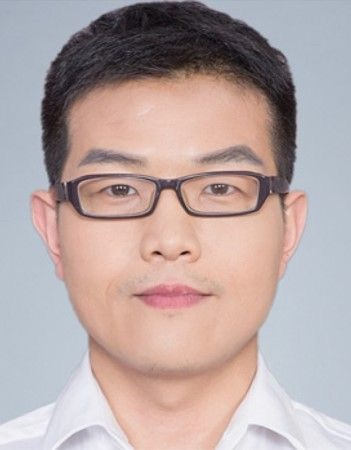
报告人简介:
Junfeng Wu received the B.Eng. degree from the Department of Automatic Control, Zhejiang University, Hangzhou, China, and the Ph.D. degree in electrical and computer engineering from Hong Kong University of Science and Technology, Hong Kong, in 2009, and 2013, respectively. From September to December 2013, he was a Research Associate in the Department of Electronic and Computer Engineering, Hong Kong University of Science and Technology. From January 2014 to June 2017, he was a Postdoctoral Researcher in the ACCESS (Autonomic Complex Communication nEtworks, Signals and Systems) Linnaeus Center, School of Electrical Engineering, KTH Royal Institute of Technology, Stockholm, Sweden. From 2017 to 2021, he was with the College of Control Science and Engineering, Zhejiang University, Hangzhou, China. He is currently an Associate Professor at the School of Data Science, the Chinese University of Hong Kong, Shenzhen. His research interests include control network systems, underwater robotics, learning and sensing in robotics, multi-agent systems. Dr. Wu received the Guan Zhao-Zhi Best Paper Award at the 34th Chinese Control Conference in 2015. He is a senior member of IEEE. He has been serving as an associate editor for IEEE Transactions on Control of Network Systems since 2023 and an associate editor for IEEE Robotics and Automation Letters since 2026..
邀请人:信息与通信工程系 付立群教授

 文档下载
文档下载 会议室预约
会议室预约 管理登录
管理登录 EN
EN 会议室预约
会议室预约 管理登录
管理登录